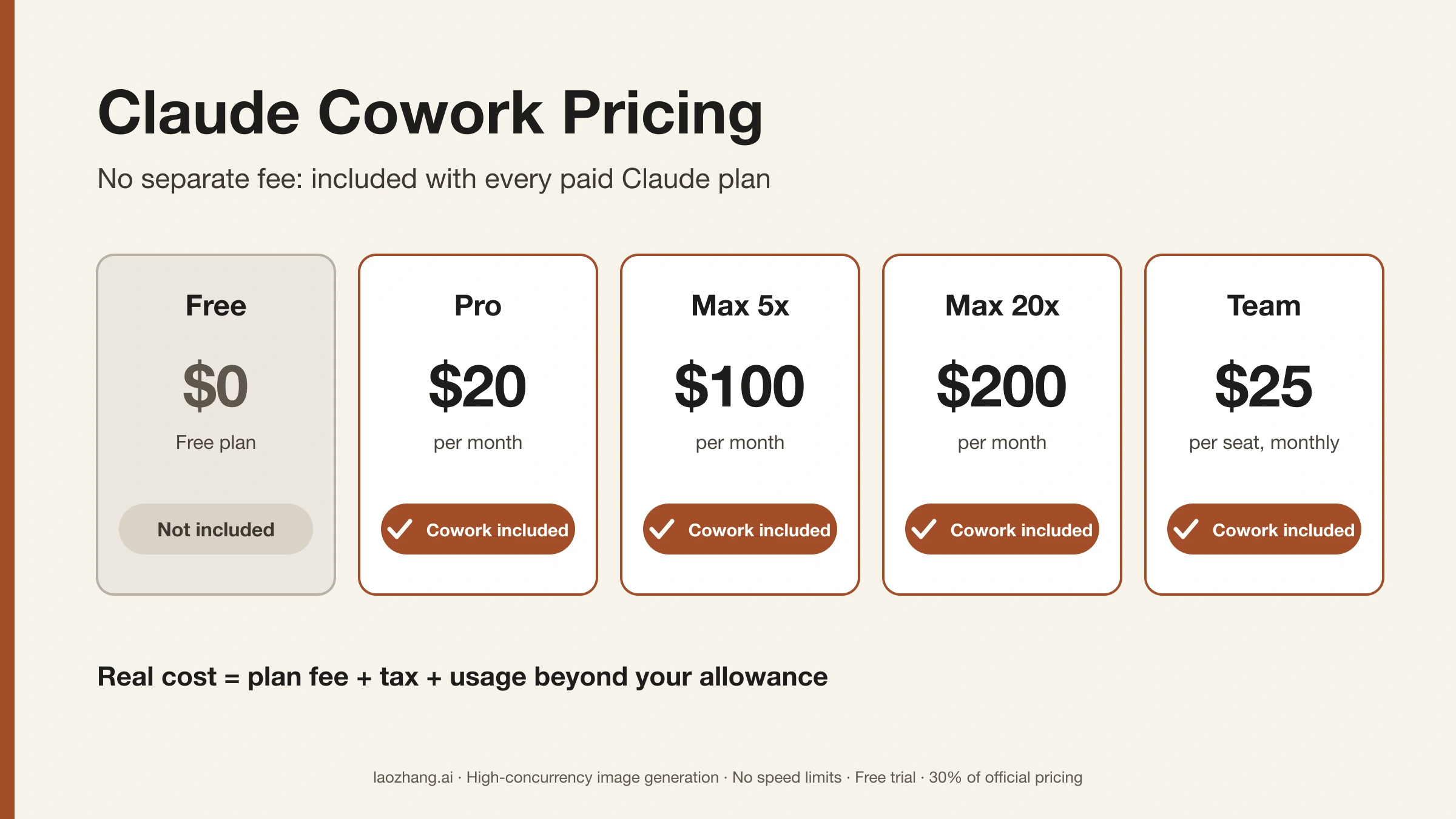
Claude does not currently advertise an individual student plan or a .edu checkout discount. Anthropic's public pricing page lists Free, Pro, and Max for individuals. Students may still have a good no-cost or lower-cost route, but it depends on who provides the account: you, your university, or a selective student program.
Use this order before paying:
- Confirm that Claude is available where you are physically located.
- Ask whether your university sponsors Claude for Education.
- If it does not, test your real coursework on Free before buying Pro.
- Treat Campus Ambassador, Student Builder, and API-credit opportunities as applications, not entitlements.

The current individual price is the same starting point for students
On August 15, 2026, Claude's public pricing showed Free at $0, Pro at $20 per month or $200 billed up front for a year, and Max starting at $100 per month. There was no separate student tier in the individual plan list.
That is a narrower claim than “Anthropic will never run a student promotion.” Account-specific offers, campus agreements, and future campaigns can exist without appearing as a permanent tier. The reliable conclusion is that a student should not plan a purchase around a universal discount code unless a current Anthropic page or the student's own checkout confirms it.
The $200 annual Pro option works out to about $16.67 per month, but the full amount is charged at once. Monthly Pro is the safer first purchase when you do not yet know whether your semester workload will regularly exceed Free. Local currency, tax, app-store billing, and account-specific checkout can change the amount you actually pay.
Max is a high-usage plan, not a student upgrade. A busy exam week does not by itself justify a $100-or-more monthly commitment. Start by measuring where Free stops helping, then decide whether that recurring constraint is worth Pro.
University-sponsored access is a different account, not a coupon
Claude for Education is purchased and managed by an institution. Anthropic's student Education guide describes access through a university-sponsored account, with features that can include advanced models, Projects, increased usage, priority access, a larger context window, and file uploads. It also says universities may customize features and policies.
In practice, the right campus question is not “Does my university email qualify?” It is “Has my university provisioned Claude for Education for me?” Ask campus IT, the library, teaching and learning services, or the office that announced the AI program. Useful questions include:
- Is access campus-wide, course-specific, or limited to selected departments?
- Do I sign in through university SSO, an invitation, or my existing university email?
- Which models, connectors, and file features has the university enabled?
- What usage limits apply to this sponsored account?
- What happens to access and stored work when I graduate or leave the institution?
If you already use a personal Claude account with your university email, the Education guide says you may be able to switch between the existing account and the new sponsored account. It also says you cannot migrate data between them. Keep the two workspaces conceptually separate from the beginning rather than discovering the boundary during graduation week.
Free access can come with institutional control
University sponsorship may be financially attractive, but it changes who administers the workspace. According to Anthropic's Education account data guide, the university organization's Primary Owner manages the account and associated data. The institution can limit services and remove access.
Primary Owner data exports, audit logs, and thumbs feedback are disabled by default on Education accounts, but a university can ask Anthropic to enable relevant access. “Disabled by default” is therefore not the same as “the institution can never access it.” Your university's agreement and internal policy govern the practical boundary.

Do not place private diary material, unpublished participant data, restricted lab information, or confidential internship documents into a sponsored account merely because it has higher limits. Check the course policy, research protocol, and university data rules first. For long-lived personal notes or portfolio material, decide what must remain in a personally controlled system.
Campus programs are opportunities, not a replacement for Pro
When Anthropic launched Claude for Education in April 2025, it also announced Campus Ambassadors and an initiative offering API credits to student builders. The current Education contact page links students to Campus Ambassador and Student Builder applications.
Those links do not establish universal eligibility, guaranteed selection, a fixed credit amount, or free Claude Pro. Cohorts, deadlines, countries, benefits, and selection criteria can change. A post describing last year's award is historical evidence, not a promise for your application today.
The route should match the goal:
- Campus Ambassador is relevant when you want to organize educational outreach or a student community.
- Student Builder is relevant when you have a project that genuinely needs the Claude API.
- Claude for Education is relevant when your institution sponsors everyday academic access.
- Pro is relevant when you need more individual Claude usage and will pay personally.
API credits and Claude.ai subscription usage are separate meters. Pro can include Claude Code within the subscription's usage pool, but it does not turn into an Anthropic Console balance for an application. A student building software should estimate API calls separately and avoid describing a credit award as “free Pro.”
Location can decide the question before price does
Claude Free and paid individual plans are limited to supported locations. Anthropic's current location list includes the United States, Japan, South Korea, Spain, and many other countries. Anthropic's Pro signup guidance says users must be physically in a supported location and may need a phone number from one.
Check the current list rather than relying on an old article or a third-party payment guide. Shared accounts, resold subscriptions, virtual-card workarounds, and location bypasses add account, payment, privacy, and terms risks; they do not become official student benefits simply because a reseller labels them that way.
Students studying abroad should use their actual current location and current checkout as the evidence. Nationality, school domain, and preferred interface language do not independently prove access.
Test Free with the work you will repeat every week
The best way to decide between Free and Pro is not a generic feature checklist. Run a one-week trial using three recurring academic tasks—for example, analyzing one paper, turning lecture notes into practice questions, and getting feedback on a draft argument.
Track where the workflow fails:
- Do limits interrupt work often enough to matter?
- Can you process the file sizes and conversation lengths you actually use?
- Do you need Projects, Research, more models, or Claude Code regularly?
- Can you verify the citations, calculations, and claims Claude returns?
- Would a monthly upgrade save meaningful time, or only remove an occasional inconvenience?
Stay on Free if it completes the job. Choose monthly Pro when you need more capacity but are still validating the value. Consider annual Pro only after the need is stable enough to justify an up-front year. A student budget is better served by a measured constraint than by fear of missing a hidden plan.
Use Claude as a learning partner without outsourcing the course
Anthropic's Education guidance tells students to follow university academic-integrity policies and not use Claude to complete assignments they are expected to do independently. The practical boundary varies by course: one instructor may allow brainstorming and draft feedback, while another may prohibit generative assistance on an assessment.
Claude is easier to use responsibly when you ask it to reveal your thinking rather than replace it. Ask for counterarguments, a Socratic sequence of questions, a practice problem with the answer hidden, feedback on clarity, or a list of claims that need primary sources. Then check the paper, recalculate the result, and write the final reasoning yourself.
Before submitting work, answer three questions: Was AI allowed for this task? Can I explain and verify every material claim? Does my institution require disclosure? If any answer is unclear, pause and ask the instructor.
The decision is ultimately straightforward. Use university-sponsored Education when your institution has actually provisioned it and the account rules fit your work. Otherwise, use Free to measure the need and pay for Pro only when recurring constraints justify it. Apply to student programs for the opportunity they describe, not for benefits someone else inferred. That approach is less exciting than a secret coupon, but it is cheaper and safer than building a semester around an offer that does not apply.