You do not need to purchase a Claude API key as if it were a software license. You need an account and billing route that you control, then a credential issued inside that account. On Anthropic’s direct platform, that means funding usage credits and creating your own key in Claude Console. On AWS or Google Cloud, it means using the cloud provider’s identity system and bill. With an independent API provider, it means using that provider’s key, balance, base URL, and support—not an Anthropic Console key.
That distinction matters because a key offered on a marketplace may work today while leaving you with no control over the organization behind it. The seller can revoke it, drain the balance, change permissions, or see activity tied to the same account. A credential you cannot rotate, limit, audit, or recover is not a durable API purchase.
Start with the bill, not the key
The fastest way to identify the right route is to ask where you want usage to appear. If the answer is Claude Console, create an Anthropic credential. If the answer is an existing AWS or Google Cloud cost center, use that platform’s IAM route. If the answer is an independent provider dashboard, use the credential and endpoint documented by that provider.
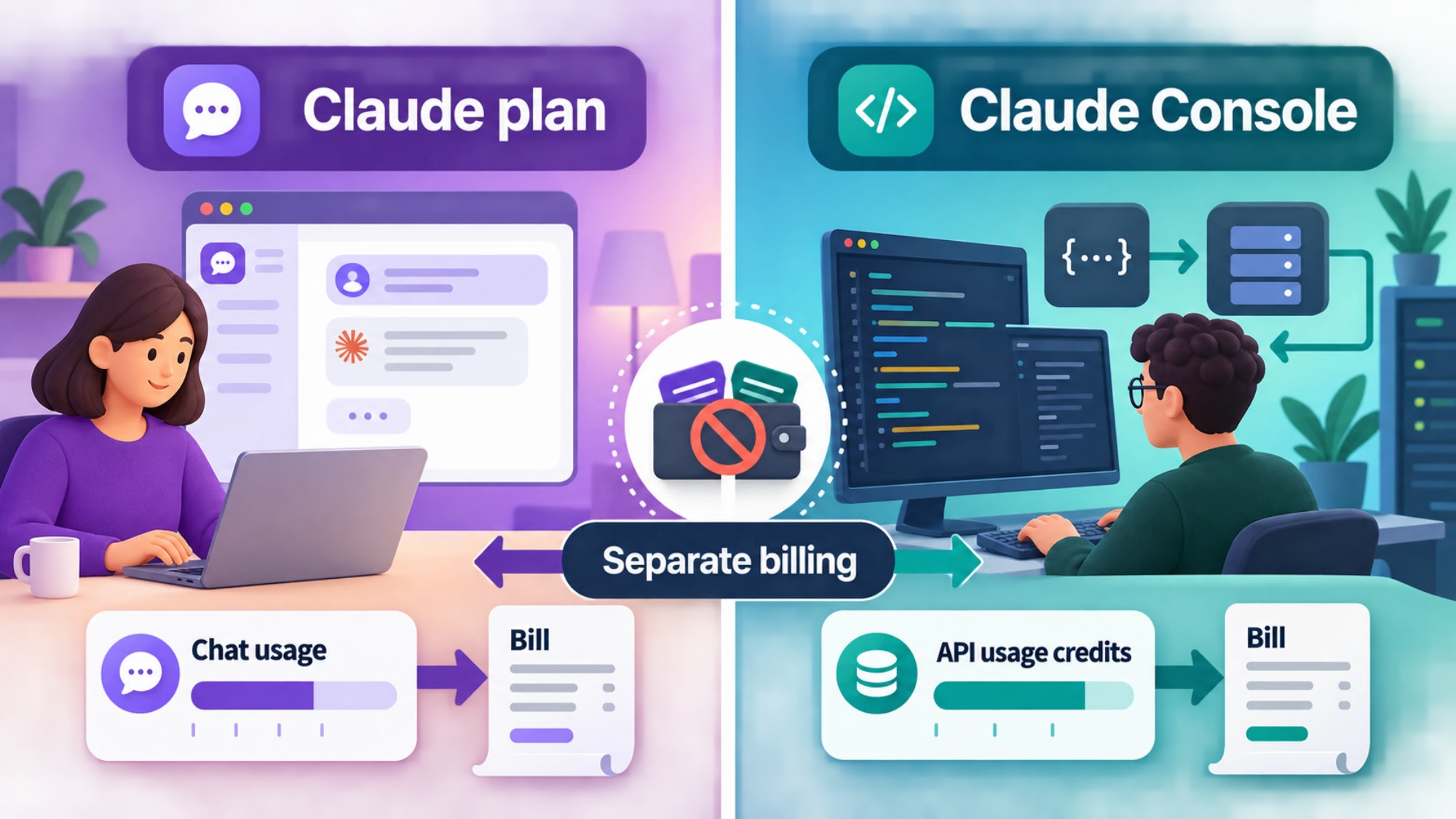
This also prevents a common billing surprise: a Claude Pro, Max, Team, or Enterprise subscription does not automatically fund Claude Console API calls. Anthropic’s product separation explanation describes the paid chat plans and the developer Console as separate products. Paying for the web or desktop experience therefore does not make a direct API request free, and funding Console does not add subscription benefits to the consumer app.
Before spending anything, write down five values for the route you are considering:
- the legal or account owner;
- the system that issues and revokes the credential;
- the balance, invoice, or cloud project that pays;
- the exact API hostname your application calls;
- the dashboard or log where you can reconcile one request.
If a seller cannot give you a consistent answer without asking you to trust their private account, stop there.
The direct Claude Console route
Direct access is the clearest fit when you want Anthropic’s native Messages API and can use Claude Platform under the current regional and commercial terms.
- Sign in to Claude Platform with an account you control.
- Open Settings → Billing and confirm the organization that will own the spend.
- Buy a deliberately small amount of usage credits for the first test. Keep auto-reload off, or set it conservatively, until you understand the workload.
- Open Settings → API keys and create a key in the appropriate workspace.
- Choose an expiration that matches how the key will be stored and rotated.
- Copy the full secret once and place it in a secrets manager or a protected local environment variable.
Anthropic’s current API billing guide says standard API and Workbench usage draws from prepaid usage credits. When the balance is exhausted, requests stop; auto-reload can buy additional credits at a threshold. The same page contains the current expiration and refund terms for purchased credits. Those details are more reliable than an old article promising a particular card, signup bonus, or minimum top-up.
The official key guide adds an important operational detail: the complete sk-ant-... secret is displayed only once when it is created. Losing it is not a reason to buy another person’s key. Revoke the lost credential and create a replacement. Use separate workspaces or keys for development, production, and different services so a leak has a smaller blast radius.
Check regional eligibility before funding
Anthropic maintains a live supported countries and regions page for commercial API access. Check it for the actual person or entity using the service, especially if your team, company ownership, billing address, and deployment region do not all match. Website reachability is not proof of commercial eligibility, and a payment that happens to go through is not permission to bypass the provider’s regional terms.
When cloud identity is the better credential
Teams already governed through AWS or Google Cloud often gain more from keeping Claude inside that system than from creating a separate static Anthropic key. The cloud route can reuse existing procurement, IAM roles, service accounts, network controls, audit logs, budget alerts, and contracts.
It is also a different API surface. Amazon Bedrock and Google Cloud use their own authentication, model identifiers, regions, quotas, and invoices. An IAM role or service account that can invoke Claude on one of those platforms is not a portable sk-ant-... key for api.anthropic.com. Conversely, an Anthropic Console key should not be pasted into cloud IAM configuration.
Anthropic’s pricing documentation treats Bedrock and Google Cloud as partner-operated platforms and directs readers to each cloud provider for official prices. Endpoint geography can change pricing and availability, so “the cloud route costs 10% more” is not a safe universal shortcut. Compare the live region, model, feature, and contract that your workload will actually use.
Choose a cloud route when governance already exists there or when cloud-native identity materially reduces secret distribution. Do not build a complex cloud account solely because a reseller calls it a way to “buy a Claude key.”
An independent provider is a separate supplier
An independent API provider can be useful when you need a different payment relationship, one balance for several model families, or an OpenAI-compatible interface for existing tools. The tradeoff is that you are adding another supplier to the request path. Its key authenticates to its endpoint, its dashboard owns the balance, and its published data, logging, support, and refund terms determine what you can rely on.
For example, LaoZhang API’s public Claude model guide documents Claude routes under its own bearer key and api2.laozhang.ai base URL, with live pricing delegated to its console. Its getting-started guide describes account setup, a first call, and usage logs. That may fit a developer who specifically needs an OpenAI-compatible provider, but it is not an Anthropic key or Anthropic bill. Current model IDs and availability must be checked in that provider’s live documentation or dashboard.
Evaluate any independent provider with the same discipline you would apply to a database or payment vendor:
- Can you create, scope, delete, and rotate your own credentials?
- Can you reconcile request logs with balance changes?
- Are the company, terms, privacy policy, and support path public?
- Is the current endpoint and model list documented?
- Does the data-handling boundary fit the information you will send?
- Are invoices, contracts, refunds, and incident responsibility clear enough for your use case?
Avoid claims such as “official quality for 80% less” unless the provider publishes evidence for the exact model route and current price. A third party supporting a Claude model does not transfer Anthropic’s quotas, SLA, data arrangement, or account rights to that route.
A marketplace key fails the ownership test
A listing with a denomination—“Claude API key $100,” “exclusive key,” or “preloaded account”—makes the secret look like stored value. The stored value actually lives in an organization or provider account. Whoever controls that account can change the key, workspace, limits, members, or balance.
Do not proceed if you cannot independently:
- sign in to the provider account;
- see which organization or project owns the key;
- revoke and recreate it without the seller;
- set a spend or key limit;
- inspect usage and billing records;
- contact the service operator through a published support channel.
Never send production data as the first test. A seller’s “warranty” does not tell you who can read logs, whether other buyers share the organization, or what happens after the warranty ends.
Prove the route with one small request
For a direct Anthropic key, keep the secret out of source code and test with a short, non-sensitive message. Replace CURRENT_MODEL_ID with a model currently shown as available to your organization.
export ANTHROPIC_API_KEY="your-new-secret"

curl https://api.anthropic.com/v1/messages \
  -H "content-type: application/json" \
  -H "anthropic-version: 2023-06-01" \
  -H "x-api-key: $ANTHROPIC_API_KEY" \
  -d '{
    "model": "CURRENT_MODEL_ID",
    "max_tokens": 32,
    "messages": [{"role": "user", "content": "Reply with: connection ok"}]
  }'
A text response is only the first signal. Confirm that the request went to the hostname you intended, that the returned model and request identifier are plausible, and that the corresponding usage appears in the expected provider log or bill. That is how you prove the credential, endpoint, and payer belong to the same route.
Treat errors according to their owner. A 401 usually sends you back to credential validity, provider mismatch, expiry, or revocation. A balance or spend-limit error belongs in the billing account that actually pays. A 429 belongs to the route’s rate limits and retry guidance; buying more key strings does not automatically add organization capacity.
Put a ceiling on the first week
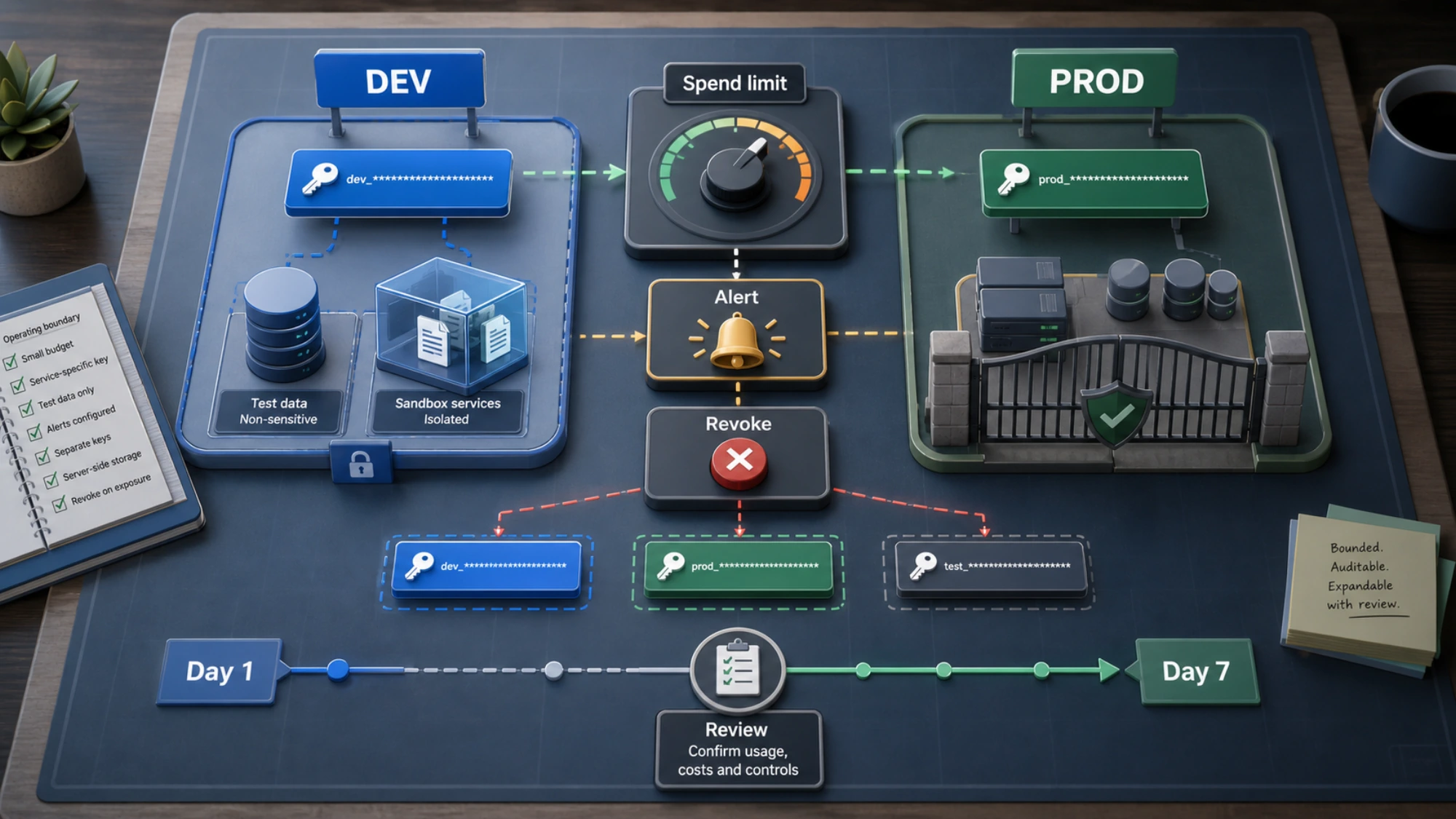
The most expensive mistake is not choosing the “wrong” provider. It is enabling an unbounded credential before you know the request volume. Anthropic Console exposes organization spend limits; cloud platforms offer project budgets and alerts; an independent provider should expose an equivalent balance, key limit, or usage record before you trust it with automation.
Start with one small budget, one service-specific credential, non-sensitive test data, and an alert that someone will actually receive. Separate development from production. Keep long-lived secrets on the server, never in browser or mobile code. Revoke immediately if a key appears in a repository, screenshot, support message, or application log. For production systems that already have a strong identity provider, evaluate short-lived workload identity instead of distributing one permanent key to every machine.
The buying decision is therefore simple to state, even when implementation varies: pay the provider whose account, bill, endpoint, and revocation controls you can verify. If any one of those belongs to an unknown seller, you are not buying reliable Claude API access—you are renting someone else’s secret.